Every Monopoly Go tycoon eventually learns the same lesson: rolling the dice without a plan is like throwing spaghetti at a wall and hoping it sticks. Maya knew that feeling all too well. She had been burning through dice rolls, chasing tiny cash rewards and ignoring the little '×1' button next to the Go prompt. Then she discovered the Dice Multiplier, and her board strategy flipped upside down.

In Monopoly Go's 2026 meta, the Dice Multiplier is still one of the most misunderstood boosters in the game. At its core, it is an on-demand risk amplifier. A player agrees to spend extra dice per roll in exchange for multiplied rewards. For example, rolling at '×5' consumes five dice instead of one, but any rent, cash, shield, or event progress that lands gets boosted by a factor of five.
What the Dice Multiplier Actually Does
To crank it up, a player simply taps the '×1' next to the 'Go!' button and cycles through the available values. The standard cap sits at ×100, though limited-time events can sometimes raise that ceiling. When Maya first saw that number, she almost choked on her coffee. 'Go big or go home,' she thought, but she soon learned the hard way that maxing out every roll is a fast lane to zero dice.
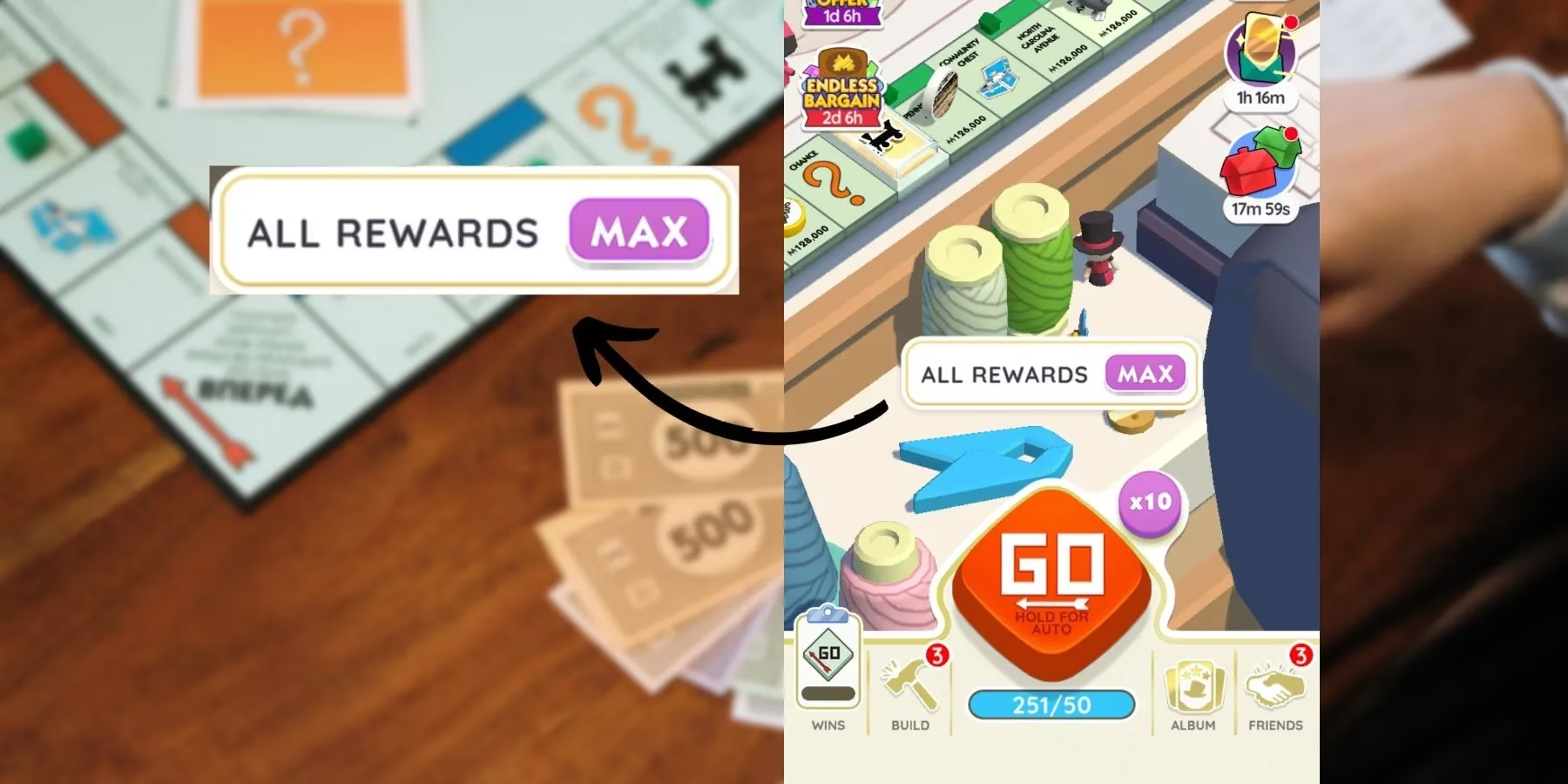
The multiplier does not change the dice odds themselves, but it does supercharge the outcomes on specific board tiles. Those include:
-
Rent Tiles
-
Community Chest Tile
-
Corner Tiles
-
Pickup Tiles
-
Tournaments and Event Progress Bars
-
Quick Wins Missions
-
Bank Heists and Mega Heists
-
Shutdowns
-
Chance Cards
This means a well-timed multiplier can turn a sleepy trip around the board into a jackpot run.
The Six, Seven, Eight Sweet Spot
Here is where the math gets fun. In Monopoly Go, the most common dice totals are six, seven, and eight. There are three possible two-dice combinations for each of those numbers, which gives them better odds than any other roll. A quick breakdown looks like this:
| Dice Total | Possible Combinations |
|---|---|
| 8 | 2+6, 3+5, 4+4 |
| 7 | 1+6, 2+5, 3+4 |
| 6 | 1+5, 2+4, 3+3 |
Because of that, the smart play is to max out the Dice Multiplier when a desired target is six, seven, or eight tiles away. That range carries roughly a 25% chance of recurring, which is about as close to a sure thing as Monopoly Go offers.
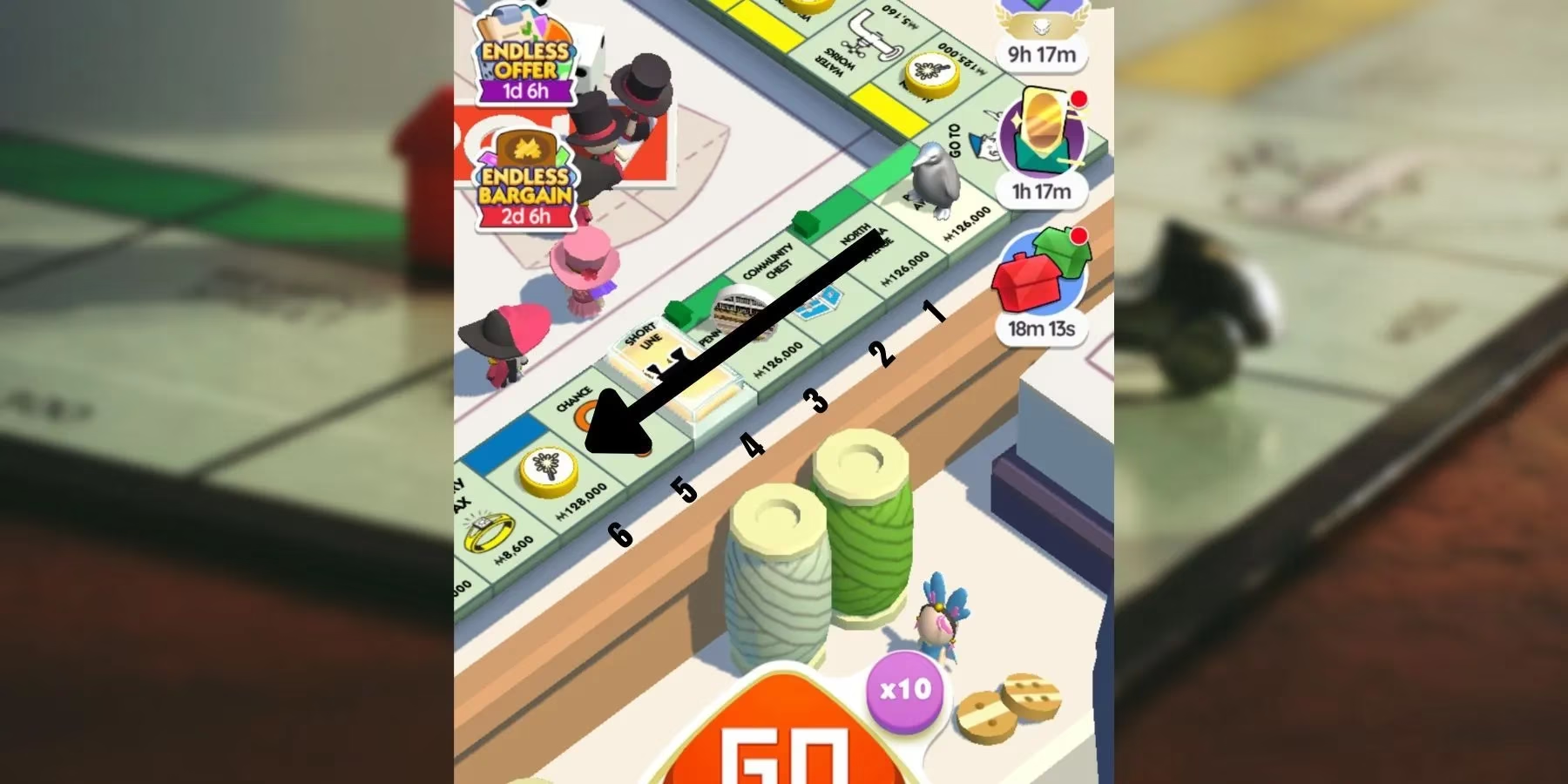
Maya started doing exactly that. If a Tournament tile sat seven spaces ahead, she cranked the multiplier. If she needed a shield or wanted to trigger a Bank Heist, she checked the distance first. If the target was two or eleven tiles away, she kept the multiplier at ×1 and saved her dice. That patience paid off, her dice pile stopped vanishing, and her event progress started climbing.
Smart Multiplier Habits for 2026
The multiplier is a tool, not a slot machine lever. The savviest players treat it like a power-up with a cooldown: use it only when the board geometry says yes. Here are a few rules of thumb that separate the tycoons from the tourist players:
-
Roll with a goal. If there is no target tile, do not increase the multiplier. Wasting high multipliers on empty stretches is a rookie mistake.
-
Prioritize Tournament tiles. Since the multiplier boosts event tile rewards, active tournaments are prime time to go bigger.
-
Use the Go corner as a bank. If cash is tight, crossing the Go tile with a multiplier can squeeze out extra money when you need it most.
-
Let the odds breathe. The house always wins if you chase every roll. Sometimes the best multiplier strategy is not pulling the trigger at all.

Of course, no strategy eliminates luck entirely. Monopoly Go is still a dice game, and even the best-laid plans can end with a Shutdown on the wrong side of the board. But players who respect the six-seven-eight window, keep an eye on Tournament tiles, and avoid multiplier greed tend to stretch their dice much further.
Maya learned that the hard way, but once she did, the game clicked. She stopped rolling like a gambler and started rolling like an investor. In a board built on luck, that edge makes all the difference.